
Condensation is the whole problem
A metal vehicle shell in an Alberta winter is a condensing surface. Two people breathing overnight in a van produce a surprising volume of water vapour, and every bit of it goes to the coldest surface available - which is the wall six inches away.
Fibreglass or wool batt against that shell gets wet, stays wet, and rusts the vehicle from the inside. It is the single most common failure in amateur conversions, and it is usually discovered years later when the panel is opened.
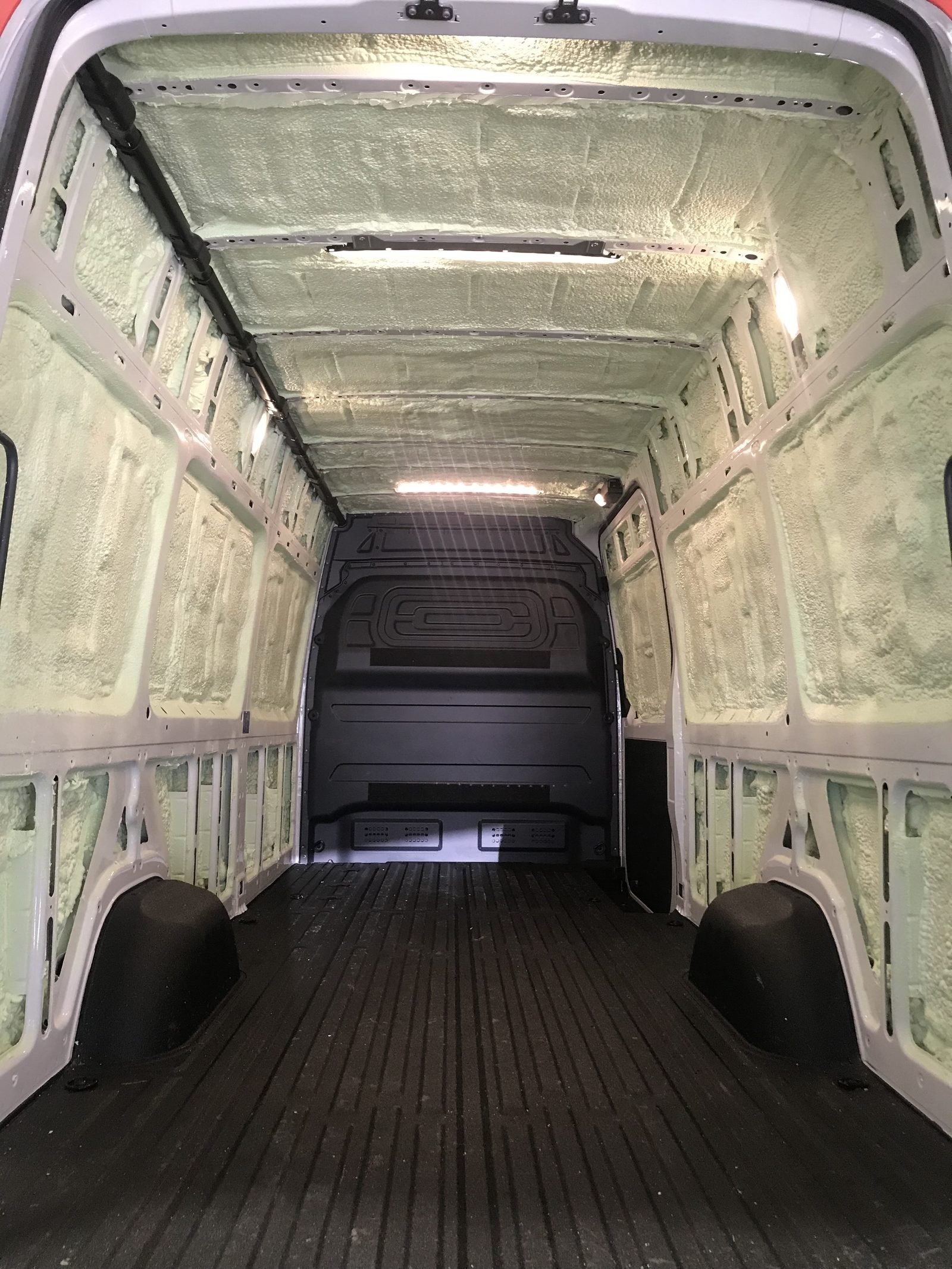
Closed-cell foam bonded directly to the metal removes the condensing surface. There is no air gap behind it and no path for moisture to reach the steel.
Why it suits the shape
A vehicle interior is ribs, channels, curves and cavities that no batt or board fits. Foam fills those irregular voids completely and adheres to the surface, which also stops the batt-slumping problem that vibration causes over time.
The secondary benefit that owners notice immediately is sound. A foamed shell is dramatically quieter on the highway than a bare one, because the foam damps panel resonance.
The constraints to respect
Thickness. Interior space is the scarcest resource in a conversion. Closed-cell's high R per inch is exactly why it is chosen here - the alternative needs twice the depth for the same performance.
Weight. Closed-cell adds real weight over a full shell. In a payload-limited vehicle that is a number worth knowing before the job, not after.
Access afterwards. Foam is permanent. Anything you may need to reach later - wiring runs, drain lines, mechanical fasteners, factory access panels - has to be planned before spraying, not discovered after.
Structural cavities. Some vehicle cavities are designed to drain or to deform in a collision. Filling them indiscriminately is not good practice. Anyone doing this work regularly knows which ones to leave alone.
Types of vehicle work
- Van conversions - the largest and fastest-growing category.
- Trailers - cargo, utility, horse and living-quarters.
- Shipping containers - not a vehicle, but the same condensing-steel-box problem.
- Truck bodies, service bodies and mobile units - where the interior is a working space in Alberta weather.
Who you are dealing with
Vehicle Spray Foam Insulation Alberta is work we take care of ourselves. We scope it, we quote it, we schedule it, and our own installers are the ones holding the gun.
Vehicle Spray Foam Insulation Alberta: Common Questions
Will foam cause rust? Correctly applied closed-cell to clean, dry, sound metal prevents rust by keeping moisture off it. Foam applied over existing rust or a damp surface seals in the problem. Preparation is the whole answer.
How thick in a van? Usually one to two inches on the walls and ceiling, which is a balance between R-value and losing interior space. It depends on what the vehicle is for and where it will be used.
Can it be done to a partly built conversion? Yes, but everything to be sprayed needs to be accessible, and anything that must remain reachable has to be identified first. Earlier is easier and cheaper.
Does it affect the vehicle's insurance or warranty? Modifications can affect both. Check with your insurer and, on a newer vehicle, your dealer before proceeding.
Get a conversion quoted
Get a quote with the vehicle, what it will be used for and how far the build has progressed.