
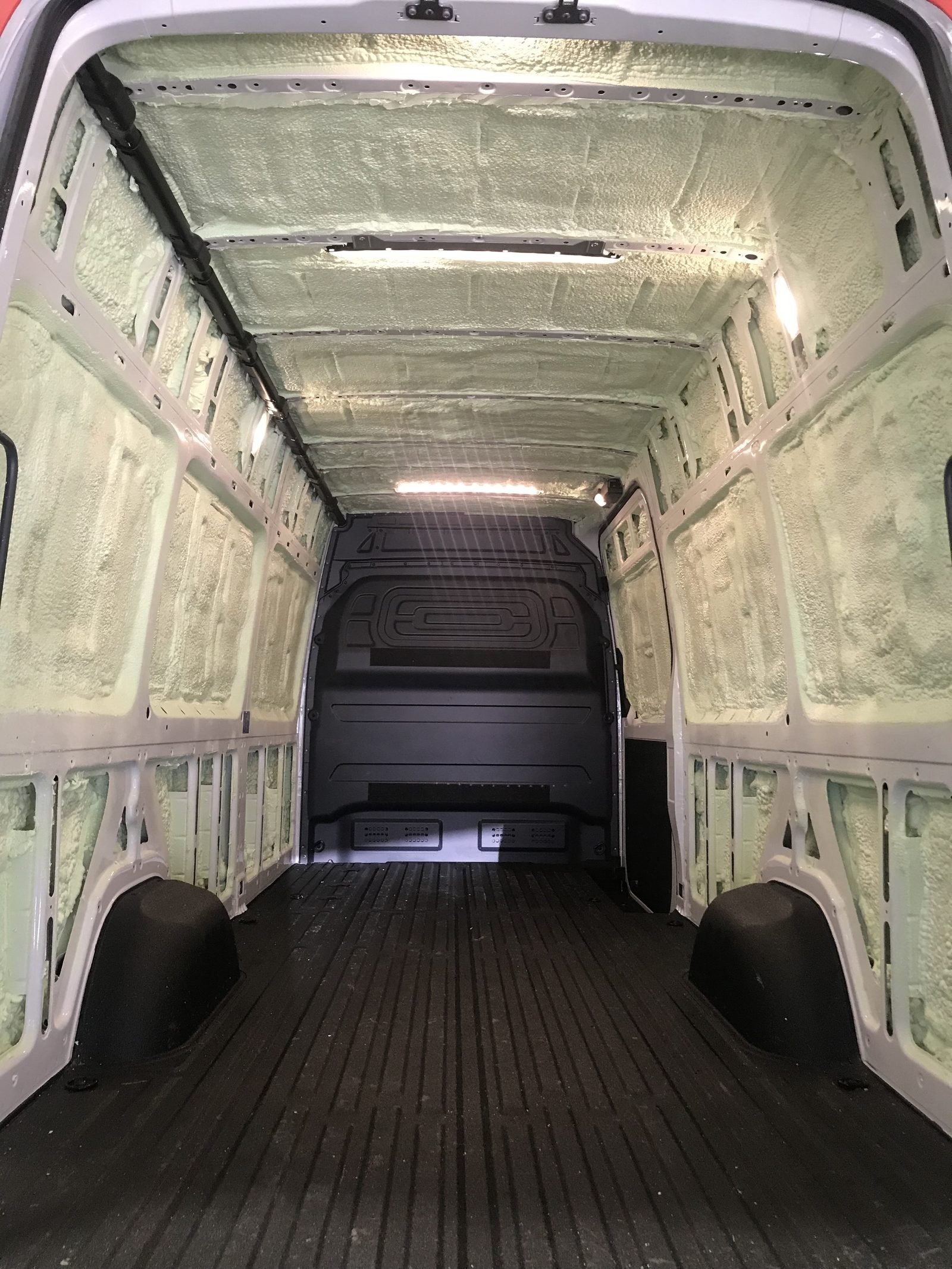
Why vans rust from the inside
A van shell is thin steel with ribs, channels and voids behind every panel. In winter it is the coldest surface in the vehicle by a wide margin.
Two people sleeping in a van overnight release a significant amount of water vapour. Cooking adds more. Wet gear drying out adds more again. All of it migrates to the coldest surface, which is the panel directly behind whatever insulation is installed.
If that insulation is fibreglass, wool or any air-permeable material, the vapour passes through it, hits the steel, and condenses. The material holds the water against the metal, and the rust starts where nobody will see it until the build is torn apart.
Closed-cell removes the mechanism
Closed-cell foam bonds directly to the panel. There is no air gap and no permeable layer for vapour to cross. The interior face of the insulation stays above the dew point, so there is nowhere in the assembly for water to form.
It also has the highest R per inch available, which matters more in a van than anywhere else - every extra inch of insulation is an inch of interior width you do not get back.
The three benefits builders report
- Thermal. A foamed van holds heat in an Alberta winter and stays tolerable in July, with a much smaller heater and less running time.
- Acoustic. Highway noise drops noticeably. Foam damps the resonance of the large flat panels that make an empty van so loud.
- Structural. Bonded foam stiffens thin panels and reduces the drumming and flexing over rough roads.
Plan before you spray
This is the advice worth the most and it costs nothing.
Run your wiring first, or run conduit for it. Foam is permanent, and chasing a wire through cured foam is unpleasant work.
Identify what must stay accessible. Factory drain paths, mechanical fasteners, access panels, anything you will service later.
Decide the thickness against your interior width. One inch versus two is a real trade between warmth and living space, and it is worth deciding deliberately.
Know the weight. Payload is finite in a van, and a full closed-cell shell is a real number. Ask for it as part of the quote.
What not to fill
Some van cavities are designed to drain water out or to deform in a collision. Filling those indiscriminately is bad practice regardless of how good the insulation is. An installer who has done vans before knows which ones to leave.
Who quotes it and who sprays it
We do Camper Van Spray Foam Insulation Alberta ourselves. We scope and quote it, we book it, and our own installers spray it -- one company, one point of contact.
Camper Van Spray Foam Insulation Alberta: Common Questions
Will foam trap moisture against the metal? Correctly applied to clean, dry, sound steel, no - it excludes moisture entirely by removing the air gap and the condensing surface. Applied over existing rust or damp metal, yes. Preparation is what separates the two outcomes.
How thick should I go? Most Alberta builds land between one and two inches. Two is warmer; one preserves interior space. It depends on whether the van is a four-season home or a summer weekender.
Should I still use a vapour barrier? Closed-cell at these thicknesses is the vapour control. Adding a separate barrier over it creates a cavity between two impermeable layers, which is worse than either alone.
Can I do it myself with kit foam? DIY kits exist. What they do not give you is controlled thickness, proper substrate temperature, or the ventilation and PPE for the application. Poorly applied foam in a small enclosed space is a problem you live inside.
Get the build quoted
Get a quote with the van model, the build stage and what the vehicle is for. See vehicle insulation and trailers.
Where We Cover Camper Van Spray Foam Insulation Alberta
- Camper Van Spray Foam Insulation Calgary
- Camper Van Spray Foam Insulation Edmonton
- Camper Van Spray Foam Insulation Fort McMurray
- Camper Van Spray Foam Insulation Grande Prairie
- Camper Van Spray Foam Insulation Lethbridge
- Camper Van Spray Foam Insulation Medicine Hat
- Camper Van Spray Foam Insulation Red Deer