
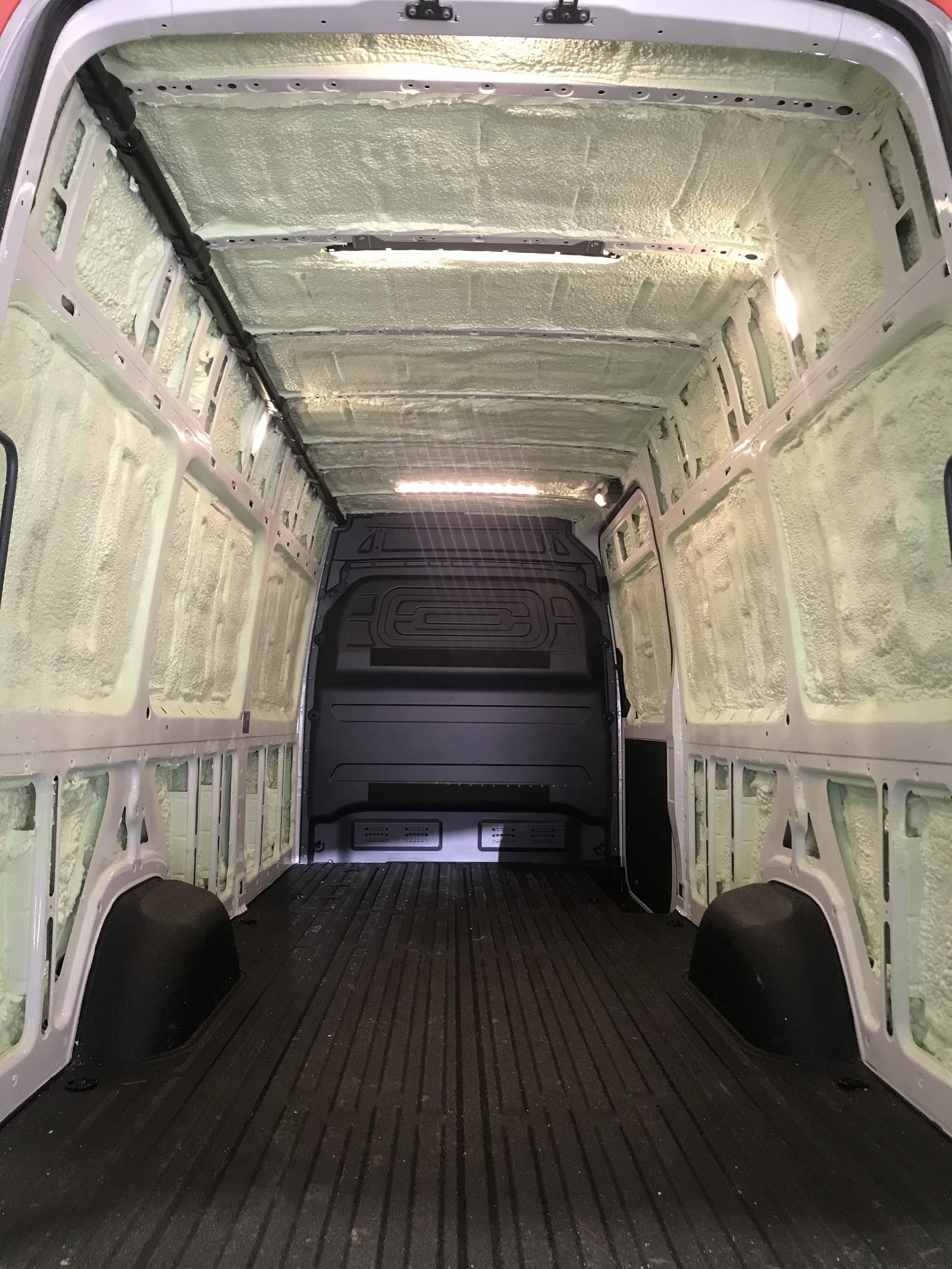
Vehicle Spray Foam Insulation Carstairs comes up most on horse trailers, and the tell is almost never the stalls. It is the tack compartment. Saddles go in clean and come out furred, a bridle hung after a ride has green at the buckles by the following weekend, and the pads smell before anybody can explain why. Carstairs sits on the corridor between Calgary and Red Deer with acreages on nearly every section road, and a trailer here does short hauls to arenas and back to a yard where it stands shut for ten days at a time.
The tack compartment shows it first
A horse puts a remarkable amount of water into the air of an enclosed box, and the compartment ahead of the stalls is where the warm damp air collects and then sits. Nothing in there is absorbent in a useful way; leather, felt and nylon just hold what lands on them. The skin of the compartment is the coldest thing in the trailer overnight, and anything stored against that skin or hung an inch off it is in the wettest air in the unit. Mildew is not a cleanliness problem on a trailer like this. It is a surface temperature problem.
Horse trailer spray foam insulation and the racket a bare box makes
The second thing owners mention is noise. An unlined aluminium or steel shell drums over washboard and rattles on the chip seal, and a horse that loads badly rarely gets better in a box that bangs. Foam bonded to the inside of a panel changes how that panel behaves: it is heavier, stiffer and damped, so it stops acting as a drum head. The same inch that stops condensation forming also takes the sharp edge off road noise, and both come from the material gripping the sheet instead of being hung near it.
Why closed cell goes onto a horse trailer shell
Closed cell runs about R-6 per inch and arrives as its own air barrier and vapour retarder, which is what you want on a shell you cannot detail by hand. Open cell is about R-3.6 per inch and takes sound out of a room well, but it will hold moisture against a cold skin, so it belongs in a finished warm interior rather than against the outside wall of a trailer. The reason we pick closed cell here is simply that it ends the cold surface — the skin is no longer available to condense on, which is the whole mechanism behind the mildew.
Following roof bows and the wheel arch
A horse trailer is a difficult shape on purpose: formed bows across the roof, a long radius over each wheel arch, verticals at the dividers and a kick wall that steps in. Board cannot be made to follow any of that without being cut into a dozen pieces, and even then it only touches the crowns, leaving a connected cavity behind it that runs the length of the trailer. That cavity moves air, and moving air is how damp gets from the stalls to the tack wall out of sight. Sprayed foam takes the shape of the bow and the arch and seals as it goes.
Vehicle spray foam insulation thickness against headroom
Headroom is the constraint on a horse trailer, not weight. Spraying the ceiling takes stall height straight off the top, and in a gooseneck it also eats into the bed space over the hitch. Most of what we do here is a moderate thickness on walls and ceiling with the attention spent on continuity rather than depth, because an unbroken inch beats a patchy three. Owners who search Best Vehicle Spray Foam Insulation Carstairs are usually asking which of those two a quote is for.
What comes out before we spray
Mats, wall liners and any screwed-on kick boards come out first. The interior gets washed down and, more importantly, dried — ammonia residue and manure packed behind a liner will stop foam bonding, and so will the dressing on an aluminium panel, which gets scuffed back. Interior lights, the escape door hardware and the divider pins get masked and kept workable, and we plan the wiring runs before any foam goes on rather than chasing a buried loom later.
Vehicle Spray Foam Insulation Carstairs: Common Questions
Will this make the trailer warm for the horses. That is not the aim and it should not be. The aim is a skin that cannot condense, so bedding, tack and the floor stay dry; ventilation still does the air exchange.
Is it worth doing on a stock trailer that only goes to arenas. Around Carstairs that is most of them, and it is usually the tack and the noise that justify it rather than the heat.
Can you spray over the existing liner. No. Foam has to be on the panel it is meant to seal, and a liner left in place leaves exactly the void we are trying to get rid of.
See also spray foam insulation for shipping containers, our full range of spray foam insulation locally, Spray Foam Insulation Alberta elsewhere in the province, and the spray foam insulation service areas page. Ask for a free spray foam quote in Carstairs.