
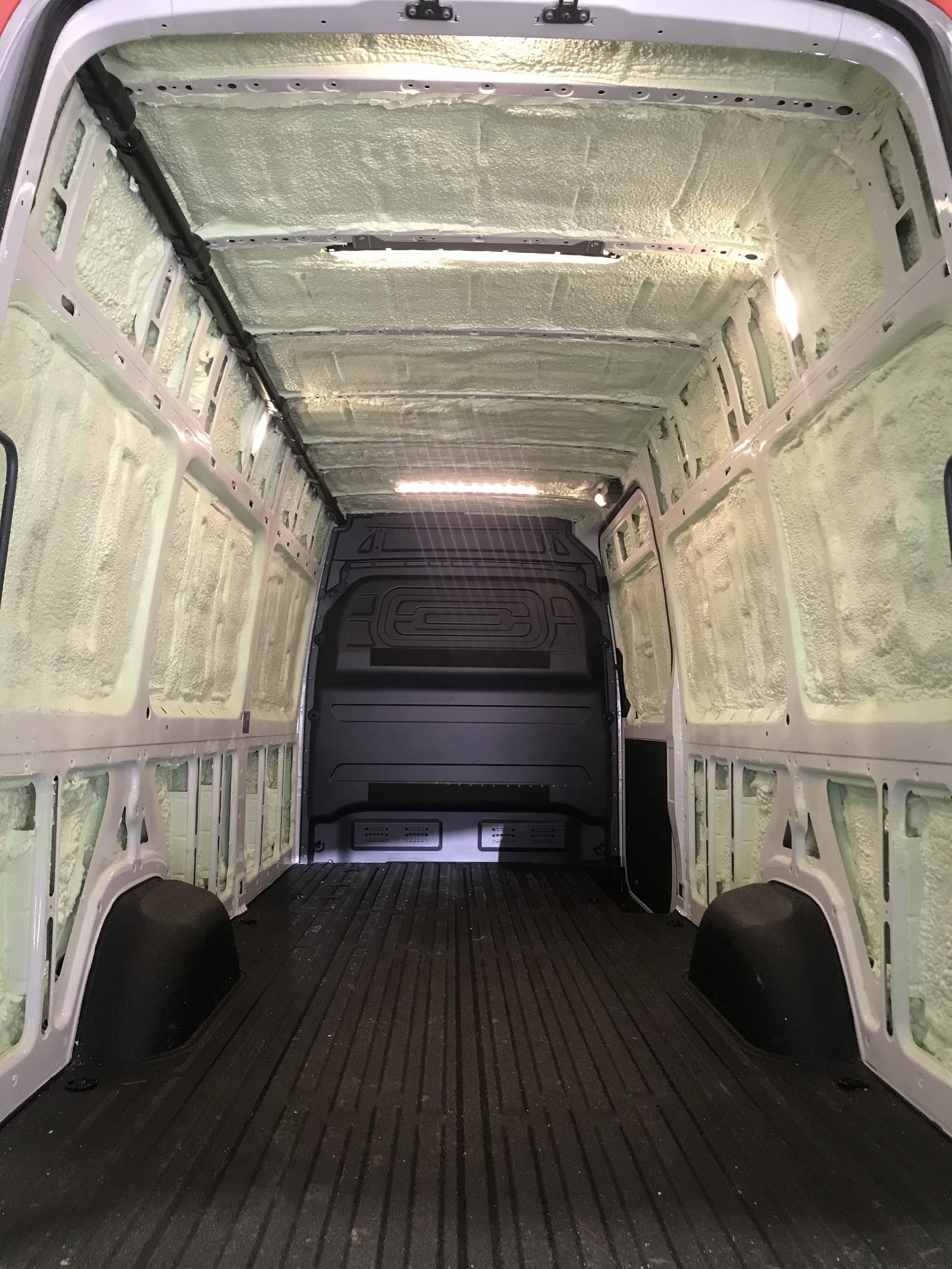
A lot of the Vehicle Spray Foam Insulation Olds work we quote is a trailer that stopped being a trailer. Somebody put a bench down one side of an enclosed tandem, wired in a few outlets, set a propane heater in the corner and now runs a trade or a weekend business out of it. It works beautifully in September. In Olds in February the same unit has water standing on the bench top by mid-morning and a damp patch on every sheet of paper left overnight.
A heater, a kettle and one person working is enough
Put a burner and a body inside a box the size of a small bedroom and the air in it goes humid within half an hour. There is nothing between the interior and the outside except a sheet of aluminium, so that sheet is the coldest thing in the trailer by a long way. The vapour goes straight to it, condenses on the inside of the wall and the roof, and either drips onto whatever is below or tracks down behind the liner into the bottom rail. The paper curls, the bench gets wet and the steel tooling spots over.
Vehicle spray foam insulation takes the cold surface out of the room
The reason this gets solved with closed cell rather than anything thicker is that closed cell is about R-6 per inch and it is simultaneously the air barrier and the vapour retarder. There is nothing to tape and no lap to get wrong in a corner. Sprayed onto the sheet, it means there is no longer a cold surface inside the trailer for moisture to pick, so the condensation simply stops happening instead of being managed after the fact.
Workshop trailer spray foam insulation gets into the post channel
An enclosed trailer is framed with vertical posts, a roof bow every couple of feet, a wiring chase and a radius at the top where the wall turns into the roof. A rigid board can be cut to the bay and screwed to the posts, which bridges every channel between them and leaves one continuous void running the length of the unit with bare metal behind it. The void is where the water forms, out of sight. Foam fills the channel, follows the bow and the radius and bonds to the skin, so nothing is bridged and nothing is left bare. It also kills the drumming that makes a bench trailer unpleasant to tow.
Thickness, bench depth and the door you have to get through
Depth comes off the working width. If the bench is eighteen inches and the aisle is what is left, a generous number on both walls changes the trailer from usable to awkward. The ceiling is usually the place to be generous, since nothing on the floor loses out and the roof is where the condensation lands. The side door opening and the ramp also have their own geometry, and we would rather plan that with you than discover it.
What comes off the walls before we spray
Liner panels and trim out, bench pulled back or removed, old tape, adhesive and any previous foam board stripped, surface rust taken off. The sheet has to be clean and dry — properly dry, not recently washed. We route the outlet loom and the heater and lighting feeds first and leave the junction boxes and clearance lights reachable, because foam over a wire is a wire you excavate later.
Who does the spraying
There is no handing you off here. We quote and manage vehicle spray foam insulation start to finish, and our crews do the spraying. "Best Vehicle Spray Foam Insulation Olds" is a phrase people type when they have been passed around; here the quote and the work come from the same outfit.
Vehicle Spray Foam Insulation Olds: Common Questions
The heater keeps it warm enough already. Why insulate. Warm is not the same as dry. A heater raises the air temperature while the skin stays cold, and the colder that skin is relative to the air, the more water it takes out of it.
Can you work around the bench. Partly. Anything that blocks the sheet has to come away from the wall, and in Olds we have done a few where the bench came out in the morning and went back in the same week.
Is a trailer used only in summer worth doing. Often yes, for the opposite reason. The same bare skin that bleeds heat in winter turns the unit into an oven in July, and the roof is the surface doing it.
A sea can used the same way has its own page: shipping container spray foam insulation. For buildings see spray foam insulation, or Spray Foam Insulation Alberta and the rest of our spray foam insulation service areas.