
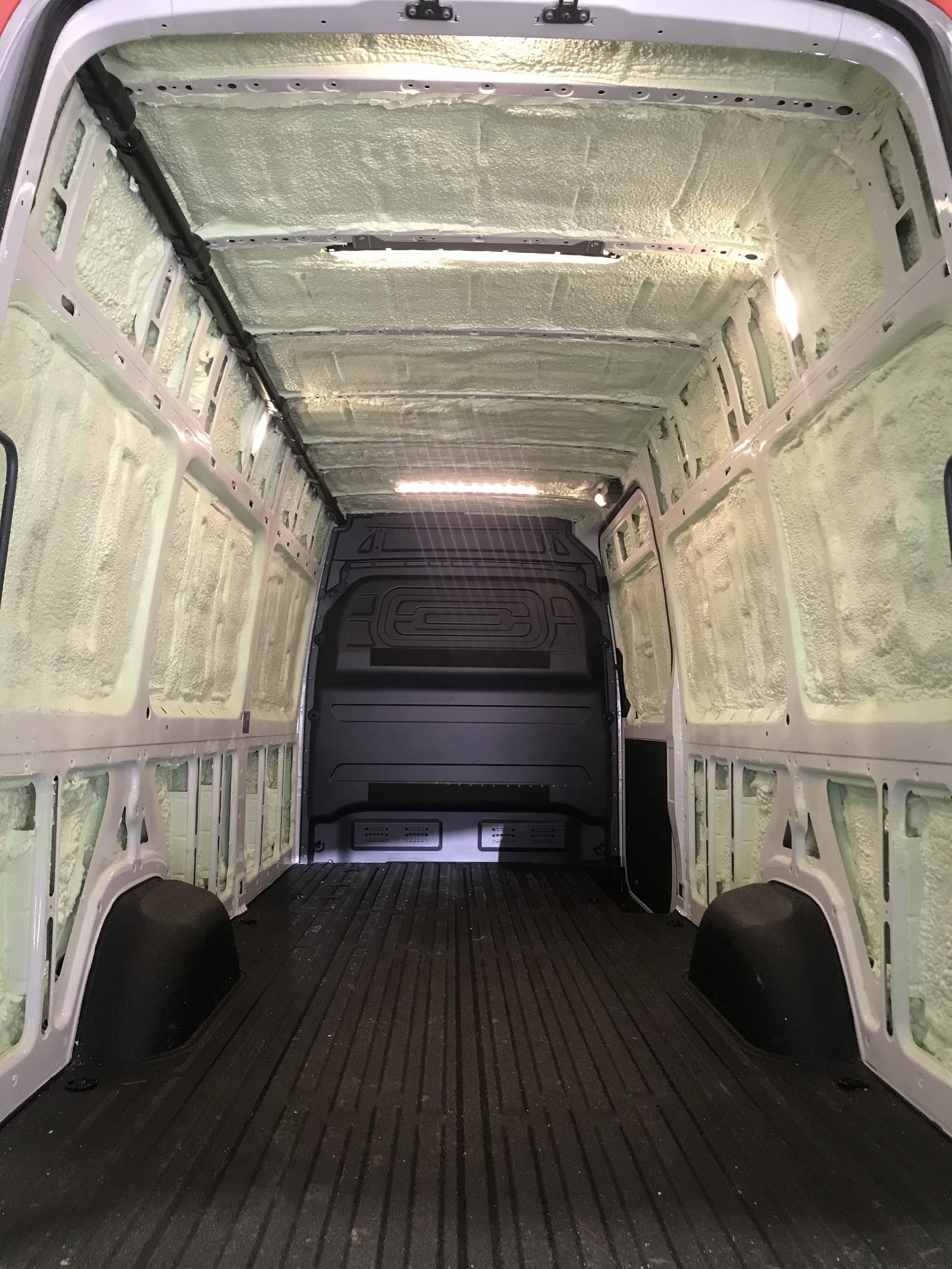
Half the farmyards in this district have a sea can parked beside the shop, and Vehicle Spray Foam Insulation Stettler is as often about one of those as it is about anything with wheels. The complaint is always the same and it always sounds impossible: it rains inside the can. Cardboard goes soft on the top shelf, parts in open bins corrode, and a bag of seed left in there over winter comes out damp. The doors have never leaked and the roof is sound.
It really does rain inside a sea can
A shipping container is a sealed steel box with a wooden floor, and both of those things hold water. Air gets in when the doors are opened, carrying whatever humidity the day had, and on a clear night the corrugated roof radiates its heat away and drops below the temperature of the air trapped inside. The moisture in that air leaves it and arrives on the underside of the roof as droplets. When the sun comes up and the steel moves, the droplets fall. That is the rain, and no amount of door gasket work will stop it, because the water was never outside.
Why corrugation is the wrong shape for a board
Everyone tries board first. A container wall is a corrugated profile with a repeating fold, plus corner posts, a top rail and the castings, and the only way to fix a flat sheet to it is to strap out past the ridges. That leaves a continuous void behind the board, open at every end, running against bare cold steel. Air moves through the void, meets the coldest part of the fold and condenses in it — all of it behind the finish where you cannot see it happening. Foam sprayed into the profile sits down in the fold, bonds to the steel and leaves no void at all.
Shipping container spray foam insulation and the plywood floor
Closed cell at about R-6 per inch is the material because it is its own air barrier and vapour retarder as it goes on. That matters more in a can than almost anywhere else, since the floor is a treated plywood deck that absorbs and releases water on its own schedule. Coating the walls and roof means the air inside stops reaching cold steel, and the swing between day and night that was driving the whole cycle flattens out.
Vehicle spray foam insulation on the trailers in the same yard
Most of these yards have a grain hopper or a stock trailer sitting beside the can with a related problem, and the same reasoning applies: the metal is the coldest surface, so the metal is where the water goes. On a towed unit we care more about weight and interior width, so the thickness conversation is different even though the mechanism is identical.
Thickness, door clearance and the space you give up
In a container the ceiling height is already tight for a tall person and the cargo doors have a swing and a seal that have to keep working. Depth at the roof is normally where the benefit is, with less on the walls so racking and shelving still fit the way they did. Where the can is used as a cold-weather workspace rather than storage, the number goes up and the shelving gets planned around it rather than the other way round.
What a used can needs before we spray
The inside has to be emptied, swept, washed and dried, and that takes longer than people expect on a can that has been a dumping ground for ten years. Old flake, rust scale and any adhesive from a previous attempt come back to steel. Lighting runs and any panel get routed first; door hardware and the locking bars are masked so they keep working.
Who you deal with
Vehicle spray foam insulation gets handled by us from the walk-through onward. We quote and manage it, and our own installers apply the foam. People who search "Best Vehicle Spray Foam Insulation Stettler" are usually looking for somebody who has actually seen the inside of a sweating can before.
Vehicle Spray Foam Insulation Stettler: Common Questions
Will a vent solve it instead. A vent helps air exchange and it will not stop condensation on its own, because the air coming in has moisture in it too. What ends the cycle is removing the cold surface the moisture is choosing.
Can a can be insulated where it sits. Usually yes. Most of the cans we do in the Stettler area are sprayed in the yard where they stand, provided the inside can be cleared and kept dry while we work.
Does the floor need doing as well. Not always, and it is a separate decision. A plywood deck on a frame behaves differently from the walls, and whether it is worth touching depends on what the can is being used for.
The dedicated page is shipping container spray foam insulation. Shops, bins and houses sit under spray foam insulation, with Spray Foam Insulation Alberta and our spray foam insulation service areas for the rest.