
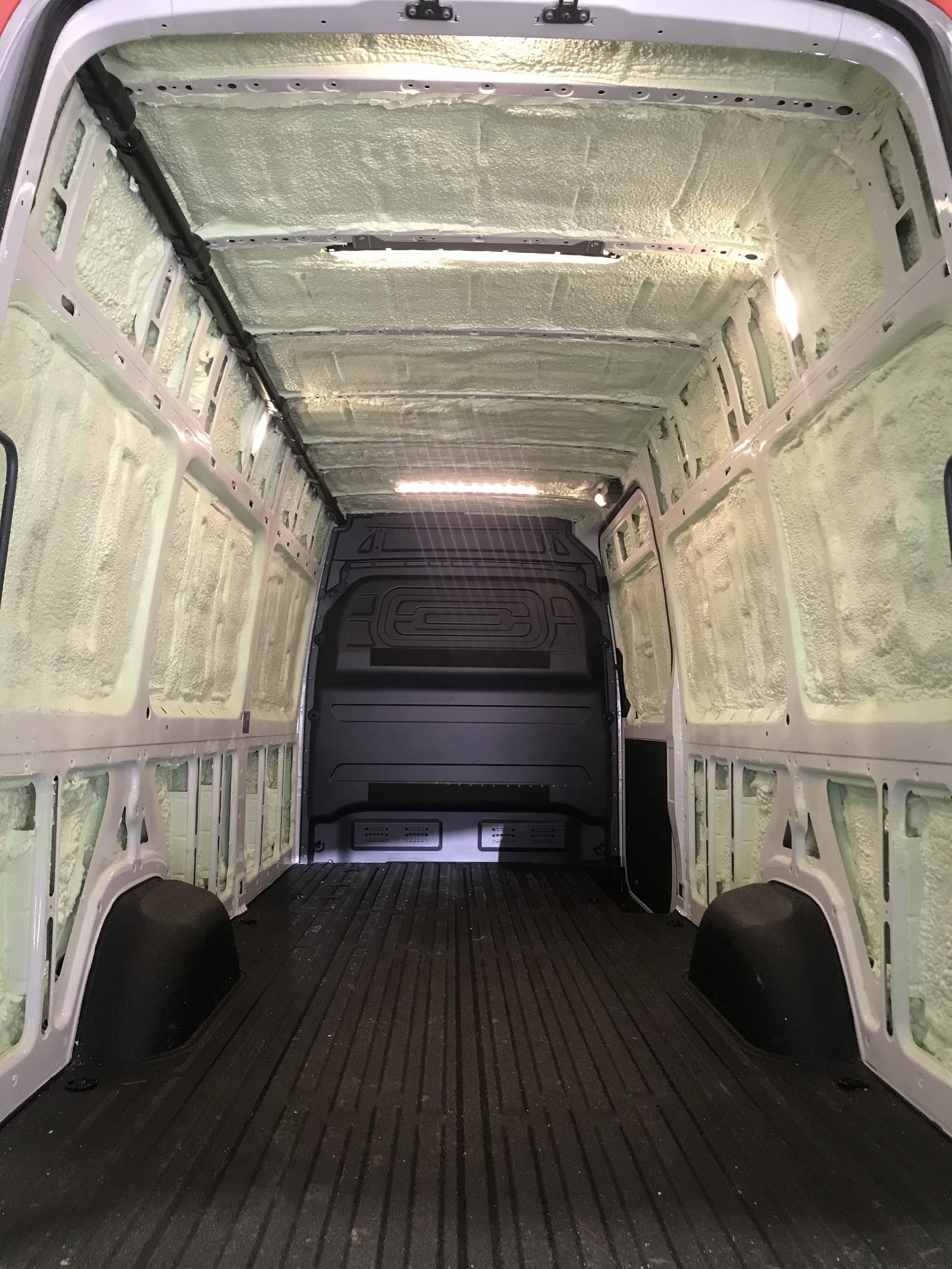
Vehicle Spray Foam Insulation Redcliff is produce work more than anything else. The greenhouses here grow and ship year round, and the awkward leg is never the long-haul reefer — it is the short run. A pallet of cucumbers leaving a warm house in a plain steel van, going to a terminal, a store or a packer across town, can take chill damage on a trip short enough that nobody thought it needed refrigeration at all. Redcliff's growers lose product to that gap, and the van is where the gap lives.
A load can be damaged before it gets anywhere
Produce does not need to freeze to be ruined. Chilling injury starts well above freezing on the crops this district is built around, and it shows up as pitting, water-soaked patches and a shelf life that has quietly halved — a day or two later, at the far end, where nobody connects it to the trip. Going the other way in July, the same box bakes. Either direction, the damage is done in transit and the paperwork says the load left in good condition.
A bare van is a steel tent
The reason a short run can hurt a load is that uninsulated sheet metal has no resistance and almost no mass. Put it in moving cold air and the inside of the panel is at outside temperature within minutes, and the air against that panel goes with it. Load warm, humid product in, and the same panel becomes a condensing surface — moisture off the crop collects on the steel and runs back onto the cartons, which is how cardboard collapses on a journey where nothing ever got wet from outside.
Why closed cell goes on and board does not
Closed cell is about R-6 per inch, and in a delivery van the useful part is as much that it is its own air barrier and vapour retarder as the number. It stops the air exchange at the seams and it stops the crop's own moisture reaching the sheet. Board cannot do the job here for a simple geometric reason: a van or body interior is posts, roof bows, a floor-edge channel and a radius at every corner, so board only touches the high points and leaves a connected gap behind it. That gap acts as a chimney — air moves, it carries heat out and moisture in, and in a vehicle that flexes all day the board works loose from its fasteners as well.
Vehicle spray foam insulation on the doors, floor edge and roof
Most of the heat on a box like this leaves where nobody sprays: the rear doors, the floor edge where the deck meets the sidewall, and the roof. A sealed sidewall with bare doors is a buffer with a hole in it, and on a van that gets opened at every stop the doors matter more than anything. We treat the doors, the header above them and the floor-edge channel as part of the job rather than an extra, because that is where the measurable loss on a short run actually happens.
Thickness against pallet space on a Redcliff delivery
The constraint here is loading width, and it is a hard one. A van load is counted in pallets or crates and those dimensions do not negotiate, so an inch on each wall can cost a whole row. We measure the load pattern first, then decide thickness — often more in the roof and the doors, less in the sidewalls, because a buffer only has to hold a load for the length of a run rather than keep a set point all day. Growers searching Best Vehicle Spray Foam Insulation Redcliff are usually trying to find out whether a quote accounts for that, and it should.
Before we spray a produce van
The body is washed and dried, old scuff liner and its adhesive taken off, and any rust along the floor edge brushed back and treated, because that edge is where salt and wash water have been sitting. E-track, dome lights, the rear door hardware and the drain holes are planned around and kept clear — a blocked drain in a van that gets washed is a wall full of water later. Wiring runs get routed before any foam, not after.
Vehicle Spray Foam Insulation Redcliff: Common Questions
It is only a short run, does it really matter. On produce out of the Redcliff greenhouses, yes. Thin steel reaches outside temperature in minutes, and chilling injury does not wait for the load to freeze.
Is this the same as making it a refrigerated unit. No. It gives the load a buffer so it holds its condition through a trip. Running a set point is a different machine and a different conversation.
Will it help in summer as well. It works the same way in both directions, and the roof is where that shows most, because a sun-struck roof panel radiates straight down onto the top layer of a load.
Also see container spray foam insulation, our wider spray foam insulation work here, Spray Foam Insulation Alberta across the province, and the spray foam insulation service areas page. We will prepare a free spray foam quote in Redcliff.