
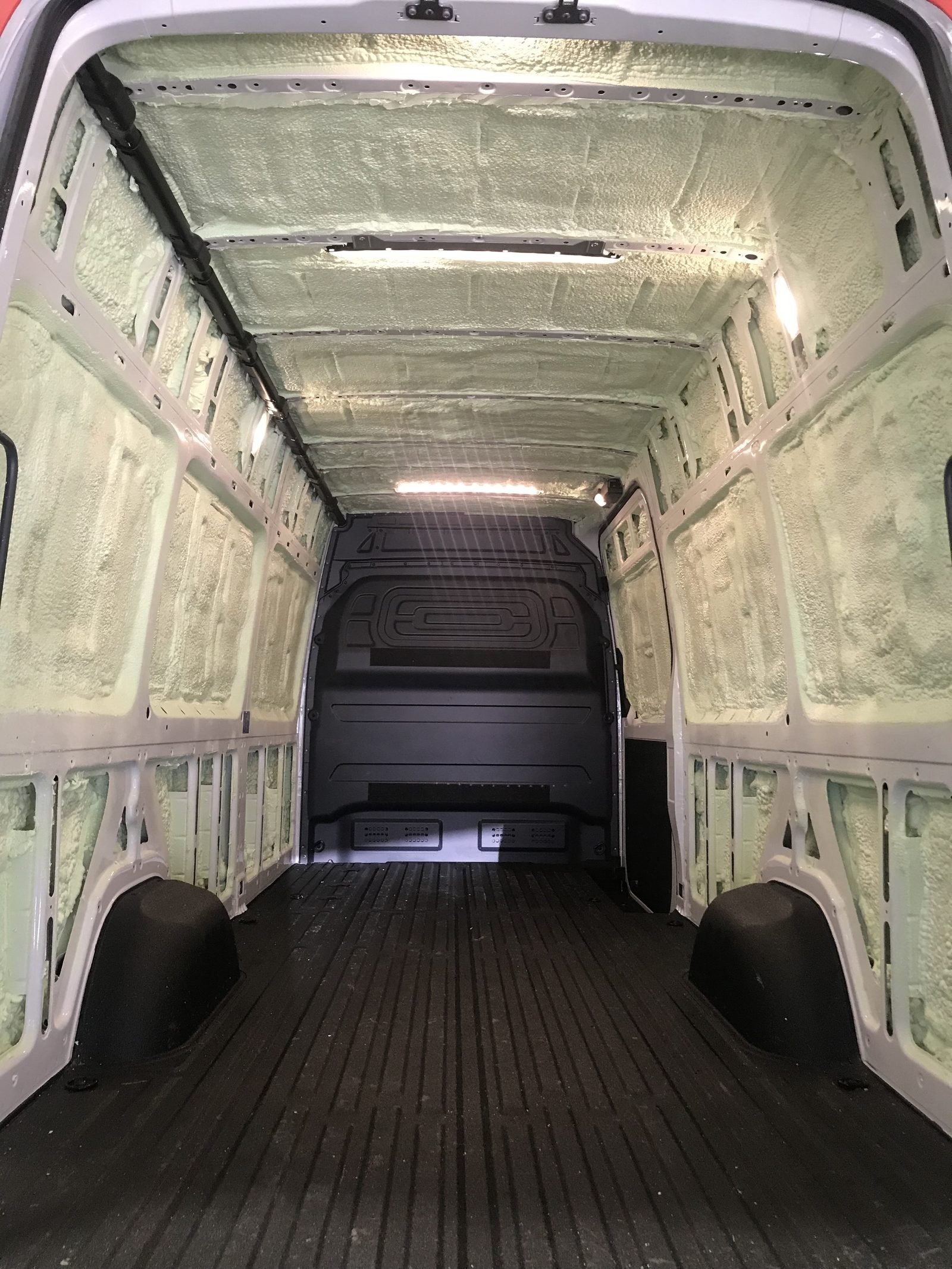
Shipping container spray foam insulation in Sylvan Lake is work on boxes that hold a season. On lake properties, rental operations and trade yards around the town, a sea can is where the equipment that only gets used from May to September spends the rest of the year.
Holding what the summer needs, for eight months
That contents mix is what makes the job worth doing. Life jackets, covers, ropes, cushions, tents, signage, rental gear and anything with fabric or foam in it are all damaged by repeated condensation rather than by cold. None of it is individually expensive and all of it is needed working on the first warm weekend, which is precisely when the damage gets discovered and precisely when there is no time to do anything about it.
Wet fabric put away every night for ten weeks
The containers behind the rental operations around Sylvan Lake have a moisture problem that has nothing to do with the weather outside. Life jackets, wetsuits, tow ropes, covers and boards go back in at the end of the day still wet, ten weeks running, into a sealed steel box that has no way of drying anything. Every one of those loads raises the humidity inside, and the box then does what a box does with humid air and a cold surface. This changes the specification rather than just the urgency: sealing the shell is still right, but on this duty it has to be paired with a deliberate means of getting air through the box, because the water is being carried in by hand every evening rather than leaking in.
Wet gear going in makes it considerably worse
Equipment packed away at the end of a season around water is rarely dry. Covers, ropes and upholstery go in damp, and in a sealed steel box that moisture has nowhere to go for eight months. A Sylvan Lake container is therefore a wetter box than the same unit in a town away from the lake, which is why the condensation problem here is worse than owners expect from the size of the building.
Sprayed to the skin, with nothing behind it
The method is a closed cell foam applied straight onto the inside of the steel with no gap behind it. It insulates and it stops air reaching the skin, and stopping the air is what actually ends the condensation. Anything installed with a space behind it leaves the steel accessible, so water still forms and now forms out of sight. Where a container is fitted out for people rather than storage, the foam is finished with a thermal barrier in a Sylvan Lake unit exactly as it would be in any other occupied building, and that belongs in the scope from the start.
Shipping Container Spray Foam Insulation Sylvan Lake: Common Questions
Why did everything in the container come out damp in May? Condensation forming on the cold ceiling all winter, made worse by gear that went in wet at the end of the season.
Why does water drip inside when there is no hole? There is none. It is condensation on the ceiling above your contents rather than a leak.
What does a container used as a summer office need over the foam? Then the foam needs a thermal barrier over it, and that belongs in the scope from the start.
Size the assembly with the R-value calculator, then get a free Sylvan Lake quote. More on Shipping Container Spray Foam Insulation Alberta.