
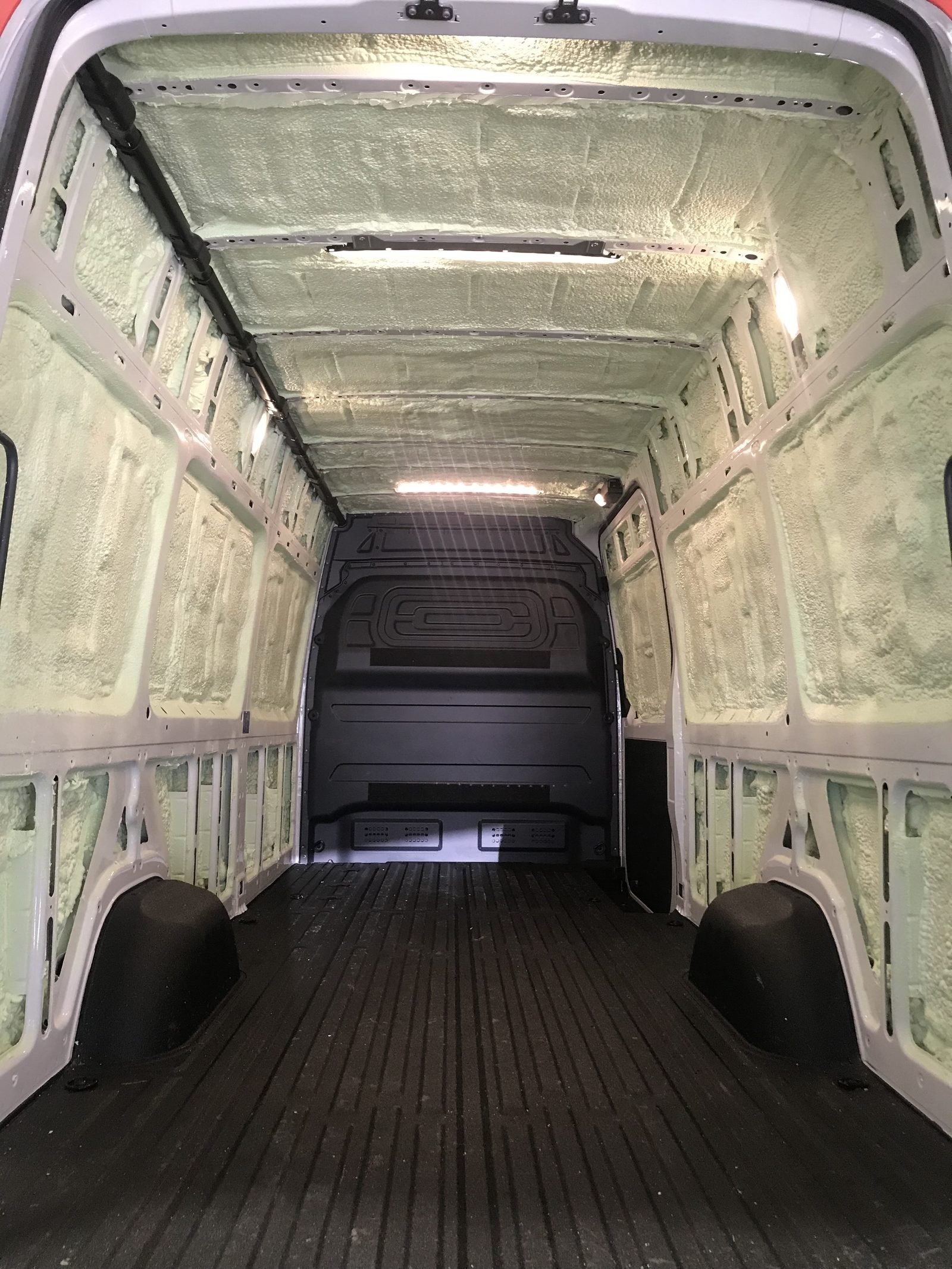
Shipping container spray foam insulation in Wetaskiwin is frequently the newest structure on a yard of very old ones, brought in because it was the quickest way to get secure dry storage without putting up a building, and it behaves nothing like anything else standing there.
A steel box has no thermal mass to hide behind
Every other building on the yard has some depth to it: timber, concrete, layers of steel and air. A container has a corrugated skin and nothing else, so it follows the outside temperature almost immediately and it does the same in both directions. It is above freezing and below it several times in a spring day, and every one of those crossings puts water on the inside of the walls. That is the whole problem with the building type and it is why sealing rather than depth is what actually changes it.
Why they get put on blocks and what that does
Containers are set on railway ties, blocks or gravel to keep the floor out of the mud, which is correct. It also means the underside is fully exposed to moving air, and the floor of a container is plywood laid on steel cross members with no insulation in it at all. That floor is the coldest surface in the box and it is the one most often left out. On a Wetaskiwin yard where a container sits through a full winter, treating the underside is what separates a dry store from one that grows mould along the bottom of everything in it.
What it is being used for changes the answer completely
A container holding fencing, drums and tools does not need much. One being used as a workshop in winter, a tack room or a place somebody spends time is a different specification with a different covering requirement. Owners routinely start with the first and drift into the second without telling anybody, which is worth naming at the survey, because the two jobs are not the same and retrofitting the difference later costs more than doing it once.
The roof was made to carry another container, not to shed water
The top of one of these is a thin corrugated panel designed to have a second container stacked on it, and it is close to flat. Standing alone on a yard it holds water in the corrugations, and it rusts from above where nobody ever looks. Nothing done on the inside changes that, and a container that is going to be sealed and used should have its roof assessed first, because a simple cover built over the top of it does more for the life of the box than anything sprayed underneath.
Shipping Container Spray Foam Insulation Wetaskiwin: The Covering Requirement
Where a Wetaskiwin container is occupied rather than used purely for storage, the foam is covered by a thermal barrier in the same way it would be in any other occupied building, and the fact that the structure arrived as a box does not change that. Space is the real constraint: a container is narrow to begin with, and foam plus a covering takes width off both sides, so it belongs in the plan from the start rather than being discovered when the bench does not fit. More on thermal barrier vs ignition barrier.
Who does the work
You are dealing with the contractor directly on shipping container spray foam insulation Wetaskiwin. We quote the job, we schedule it, and our own installers do the work.
Shipping Container Spray Foam Insulation Wetaskiwin: Common Questions
What makes the inside of a shipping container damp? That is condensation on the steel skin. It has no mass to slow the temperature down.
Does the floor need doing? Yes, and it is the part most often skipped. The underside is open to the air.
Will we lose much space? Some, and it matters in a container. It gets planned in rather than found out later.
How much does shipping container spray foam insulation cost in Wetaskiwin? If the container might be sold on later, say so before the work starts. Around Wetaskiwin a sprayed interior changes what the box is worth to the next buyer, and that is worth weighing against the comfort while you own it.
Best shipping container spray foam insulation contractor in Wetaskiwin? Ask what the work does to resale. Around Wetaskiwin containers change hands often, and a contractor who can talk about that is thinking past the invoice.
Size the assembly with the R-value calculator, then get a free Wetaskiwin quote. More on Shipping Container Spray Foam Insulation Alberta.