
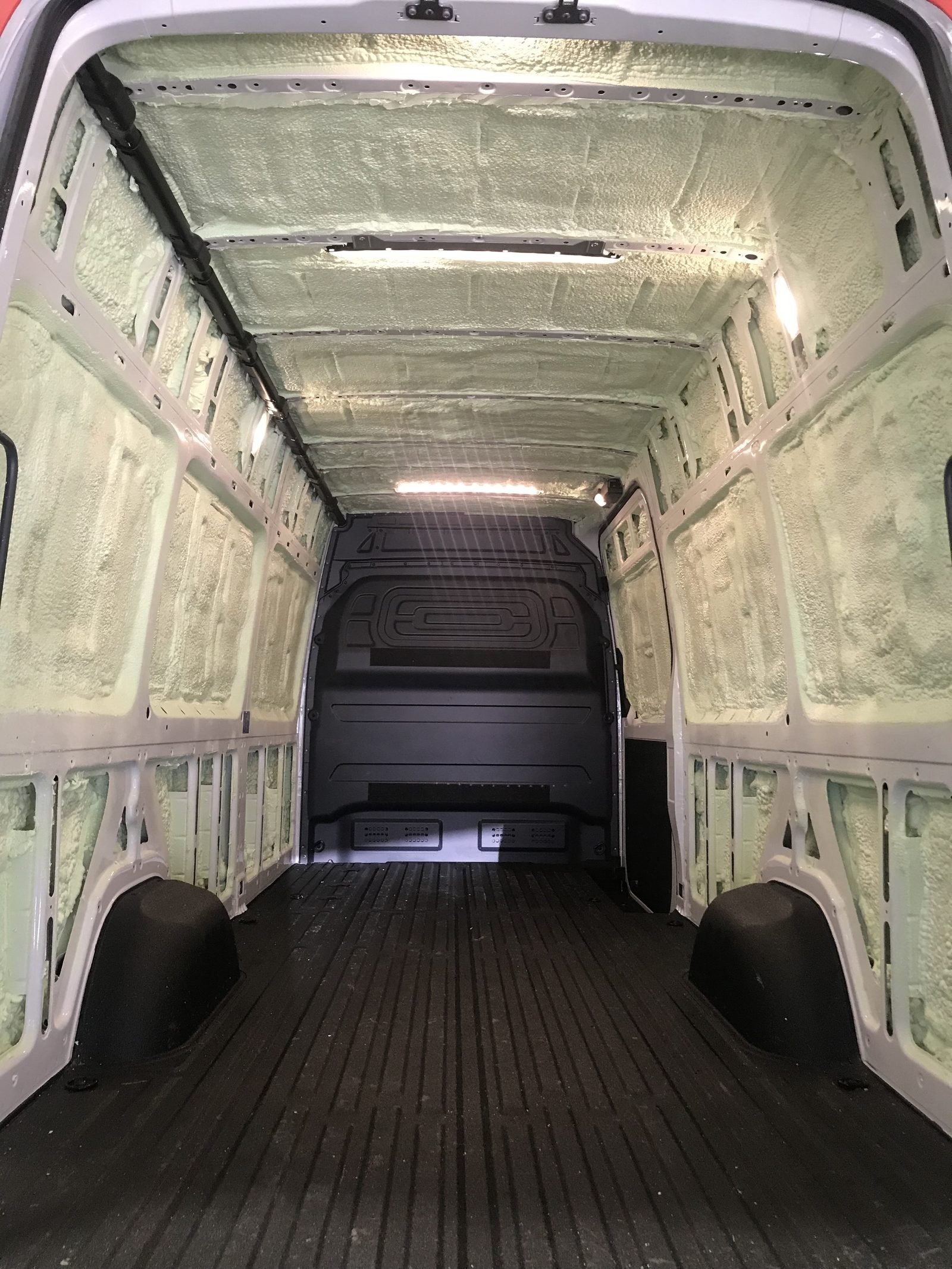
Shipping container spray foam insulation in Strathmore is closed cell applied straight onto the inside of the steel with nothing behind it, because the corrugated profile leaves a continuous void behind anything rigid and a void against cold steel is where the water forms unseen. On the yards out here a container is frequently the parts store.
The box that holds what you cannot drive an hour for
On an operation this far from a supplier the container is rarely holding sentimental things. It is holding filters, belts, fittings, fasteners, oil, and the spares kept precisely so that a breakdown does not become a day in town. That is the worst possible contents for a steel box: small metal items with threads and machined faces, packaging that absorbs water, and electrical parts in cardboard. The building is being asked to protect exactly what it is worst at protecting.
Whether it should be a parts store at all
It is worth asking before spending anything, because on most of these yards there is an alternative already standing. A sealed corner inside the shop, or a small insulated room built into the end of a post-frame building, is a better environment for spares than a steel box will ever be, it is warm when somebody is working, and it is where the person needing the part already is. A container earns its place when there is genuinely nowhere else, or when what is stored has to be lockable and separate. Where there is a building with room in it, moving the parts is cheaper than insulating the box and it produces a better result.
Where it is standing, and whether that was ever thought about
These get dropped where the truck could reach, which is not always where the ground is level or drained. A container that has settled at one corner racks slightly, and once the frame is out of square the doors stop meeting their seals along the full length. That is a permanent opening at one end of the box and it defeats whatever goes on the walls, so levelling and blocking comes before any insulation. It is a small job and it is far easier before the walls are sprayed than afterwards.
A sealed box still needs somewhere for moisture to go
This is the part that gets missed on a parts store. Sealing the steel stops water forming on the skin, which is the whole point, but it also stops the box exchanging any air at all, and whatever moisture came in with the contents then stays in there. On a container holding oil, packaging and things that were put away damp, that matters. The arrangement that works is the sealed shell plus a small deliberate vent arrangement, high and low, sized to move very little air but to move it continuously. It costs almost nothing and it is the difference between a dry box and a sealed damp one.
Shipping Container Spray Foam Insulation Strathmore: The Covering Requirement
As soon as a Strathmore container is used as a workshop or an office rather than a store, the foam has to be covered with a thermal barrier, and that belongs in the quote from the beginning. It is worth settling which it is before pricing, because a box converted to a workspace later needs the covering retrofitted over foam already on the walls, in a space with no room to work in. More on thermal barrier vs ignition barrier.
Shipping Container Spray Foam Insulation Strathmore: Common Questions
What if it leaks and we cannot find the hole? There usually is not one. That is condensation forming on the ceiling and falling.
Why do the doors not shut properly any more? That is the box racking on uneven ground, and it is fixed before anything goes on the walls.
Is spray foam worth it in a container we keep parts in? Then it is holding exactly what a steel box damages fastest, and that is the case for doing it.
Size the assembly with the R-value calculator, then get a free Strathmore quote. More on Shipping Container Spray Foam Insulation Alberta.