
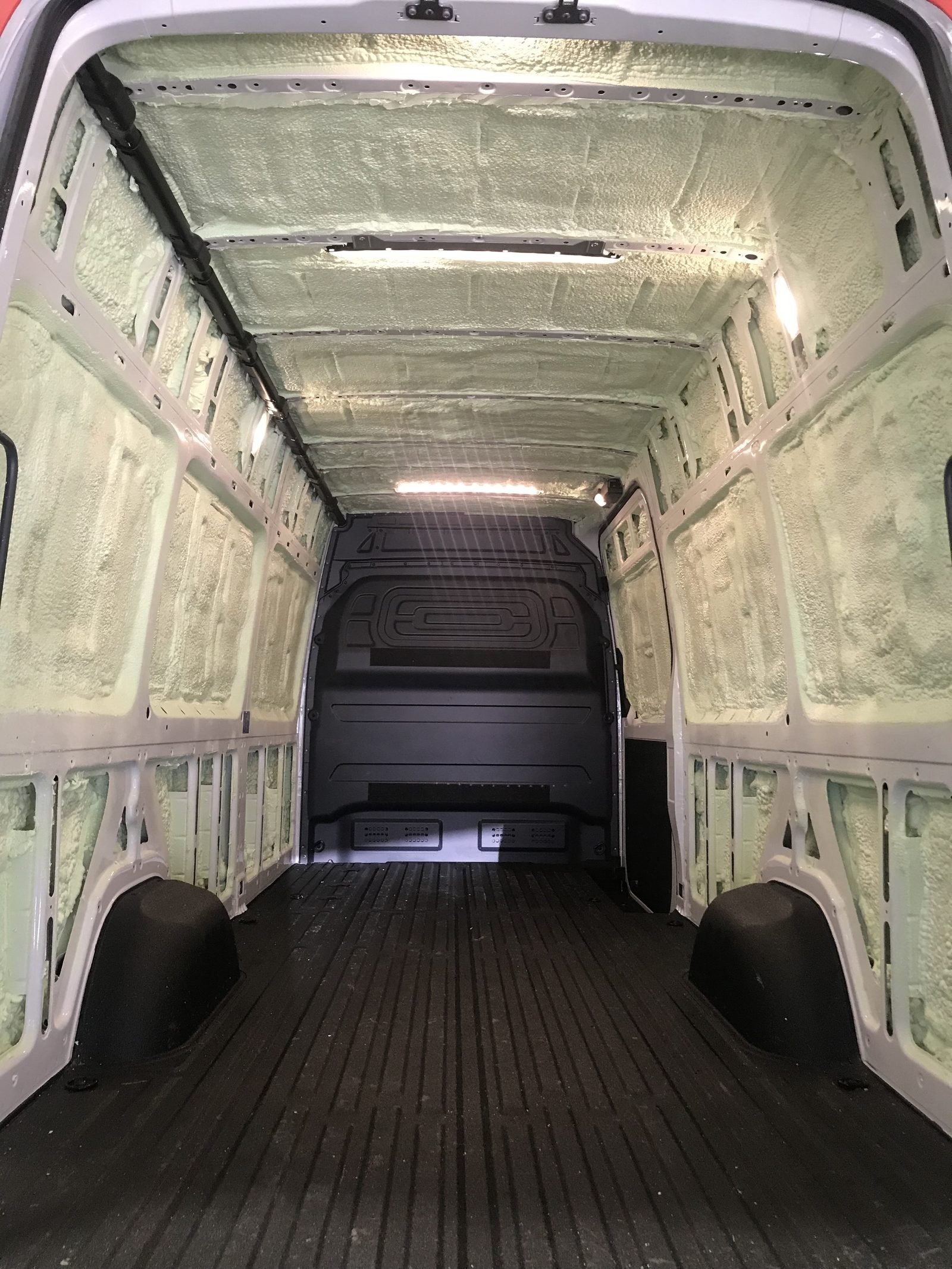
Shipping container spray foam insulation in High River is closed cell applied straight onto the inside of the steel with nothing behind it, because the corrugated profile leaves a continuous void behind anything rigid and a void against cold steel is where the water forms unseen. A good number of the containers in this district arrived at short notice and were put wherever a truck could reach.
A box placed in a hurry and never moved since
That is the honest history of many of these. Something needed storing quickly, a container was brought in, and where it went was decided by access rather than by ground. Ten years on it is still there, on ground that was never levelled or drained for it, and the consequences are structural rather than thermal: a corner has settled, the frame has racked slightly, and the doors no longer meet their seals along their full length. That is a permanent opening and it defeats whatever goes on the walls.
Levelling and drainage come before anything is sprayed
It is a small job and it is far easier before the walls are treated than afterwards. Blocking the box level, and putting the ground around it in a state where water runs away rather than standing at the door end, costs very little and it is the difference between an envelope that works and one that is being undermined from below. On a High River yard where the fall of the ground is already understood, it is usually obvious what needs doing once somebody looks.
What is in it, and whether it should be
The contents matter more than the box does. Where a container is holding tools, parts or anything with a circuit in it, the case for treating it is straightforward. Where it is holding things that would be perfectly happy in the shed, the cheapest correct answer is frequently to move them and leave the box as it is. Going through what is actually in there costs nothing, takes an afternoon, and on a fair number of these removes the reason for the job entirely.
Blocking it level is the cheapest work on the property
It is worth separating from the insulation question because it is a different order of cost. Getting a container sitting square on proper blocking, with the ground around it shedding water rather than holding it, is a morning's work with a machine and some cribbing. It stops the frame racking further, it lets the doors seal along their full length again, and it removes the standing water at the door end that does most of the damage to the floor. On a fair number of these that alone changes the building's behaviour noticeably, and it should be done whether or not anybody ever sprays anything inside it.
Shipping Container Spray Foam Insulation High River: The Covering Requirement
As soon as a High River container is used as a workshop or an office rather than a store, the foam has to be covered with a thermal barrier, and that belongs in the quote from the beginning. It is worth settling which it is before pricing, because a box converted to a workspace later needs the covering retrofitted over foam already on the walls, in a space with no room to work in. More on thermal barrier vs ignition barrier.
Shipping Container Spray Foam Insulation High River: Common Questions
Why do the doors not shut properly any more? That is the box racking on uneven ground, and it is fixed before anything goes on the walls.
What if it leaks and we cannot find the hole? There usually is not one. That is condensation forming on the ceiling and falling.
Should we treat it at all? Depends what is in it. Sometimes moving the contents is the cheaper and better answer.
Size the assembly with the R-value calculator, then get a free High River quote. More on Shipping Container Spray Foam Insulation Alberta.