
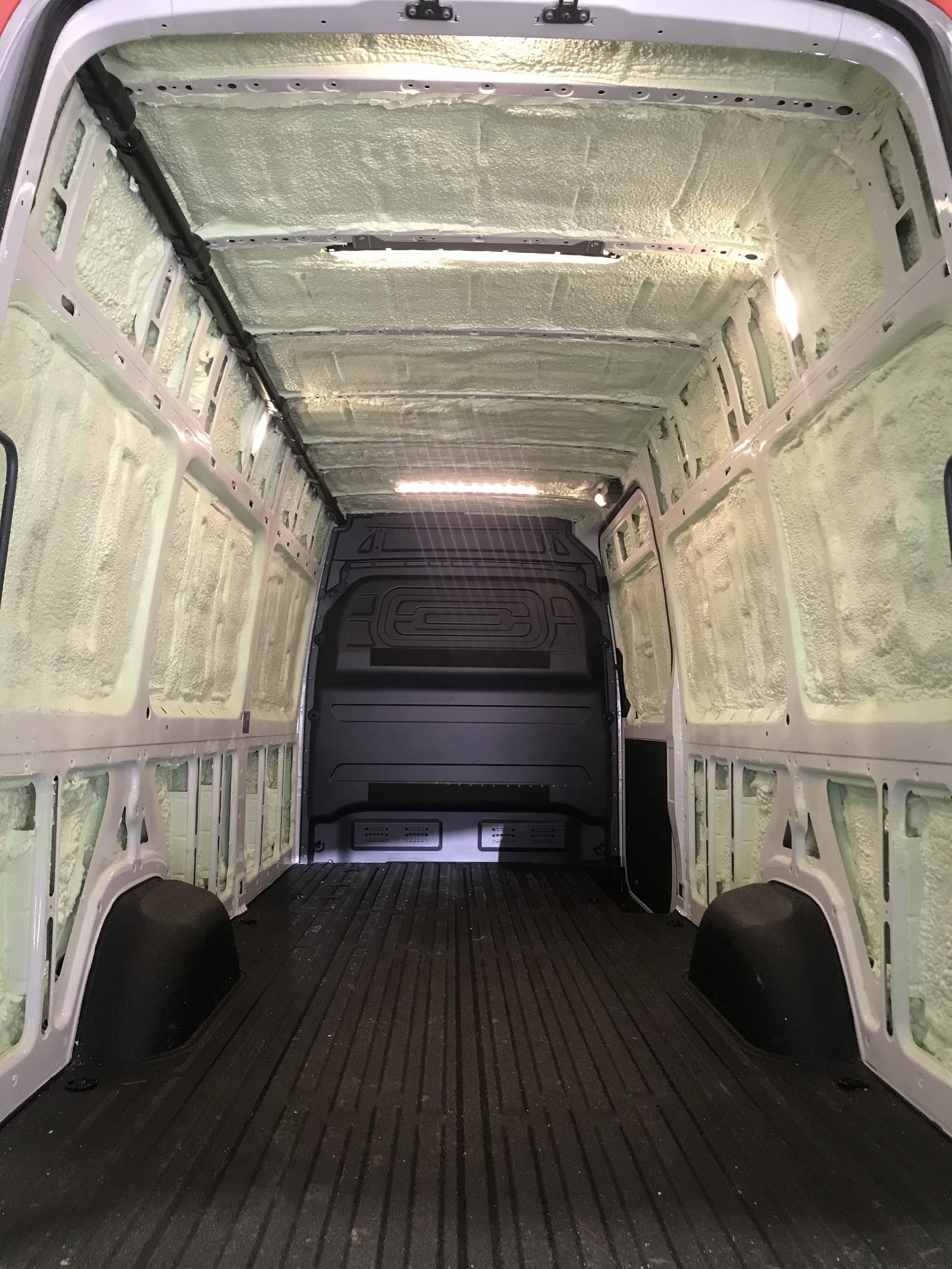
A container is unusual among the buildings we work on because it has almost no joints. It is a welded steel box, and that one fact makes it both the easiest building to seal and the one where everything depends on a single detail.
The doors are the only joint in the building
There are no laps, no fasteners through the skin, no girt lines and no junctions between phases. The entire air story of a container is the door end: two leaves, four cam locks, a rubber gasket around the frame, and the sill. On a unit that has been in service and then parked on a yard, the gasket has usually hardened, the leaves are slightly out of alignment, and the cams no longer pull evenly. You can insulate the whole box perfectly and leave the one leak it has untouched, and that happens often.
Which means the gasket and the cams come first
Before any specification about foam thickness, the doors need to close against a seal that is intact along its whole length and cams that pull the leaves tight. On a container sitting on uneven ground the frame can be twisted enough that the leaves will not meet, and that is a levelling problem before it is a door problem. Setting the unit level on a proper base is therefore part of insulating it, not a separate conversation.
Why the corrugations rule out everything else
The walls and roof of a container are ridged steel. Nothing flat fits against them, and any board or batt system has to be held off the steel by framing, which leaves a continuous air space directly against the coldest surface in the building. That space is where the condensation forms, out of sight behind the finish. Closed-cell foam sprayed directly to the steel fills the corrugations, bonds along their whole profile, and at two inches or more is the air barrier, the vapour control and the insulation in one layer with nothing behind it.
What these are used for on a Bow Island yard
In this area the container is most often the secure dry store: seed, chemical, tools, fencing, parts, and anything that needs to be out of the weather and locked. Some of that has a storage range on the label and some of it simply must not get wet. A closed steel box in the hottest part of the province reaches a very high internal temperature on a July afternoon and then cools hard under a clear night sky, which is a demanding cycle for any of it. Insulating the box narrows both ends of that range without any mechanical system.
If anything with a flame or a fume goes in it
A container insulated with foam becomes genuinely tight, and that changes two things. Anything stored in it that gives off fumes needs deliberate ventilation, because the box will no longer breathe through its defects. And sprayed foam needs a covering for fire protection in any space people enter and work in. We will tell you what the assembly requires before you plan a finish, because it affects both the budget and whether a shelving layout still fits.
Inside or outside, and the sunlight limit
Spraying the interior is the normal choice: it is protected, it is simple, and the steel exterior stays as it is. Spraying the outside is occasionally done where the full internal dimension has to be kept, and in that case the foam must be coated, because ultraviolet degrades exposed polyurethane and this region gets as much sun as anywhere in the country. An uncoated exterior application here will chalk and break down, so the coating is part of the system rather than a finish.
The crew on your job
We do shipping container spray foam insulation Bow Island ourselves. We scope and quote it, we book it, and our own installers spray it -- one company, one point of contact.
Shipping Container Spray Foam Insulation Bow Island: Common Questions
What should be fixed before insulating a container? The doors and the way the unit sits. A hardened gasket, uneven cams or a twisted frame will undo the result, and levelling the unit is usually the root of it.
Why spray directly to the steel? Because anything framed off the wall leaves an air space against the coldest surface in the box, and that is where water forms. Bonded foam removes the space.
Can it be insulated on the outside? It can, and then it must be coated. Exposed foam degrades in sunlight, and there is a great deal of sunlight here.
How much does shipping container spray foam insulation cost in Bow Island? Internal surface area and thickness set the foam, and a twenty-foot unit and a forty differ accordingly. Door repairs, levelling and any required covering are separate visible items.
How do I choose a shipping container spray foam contractor in Bow Island? Ask what they intend to do about the doors. A quote that only describes the walls and roof has not looked at the only joint the building has.
Size the box with the R-value calculator, then get a free Bow Island quote. More on Shipping Container Spray Foam Insulation Alberta province-wide.