
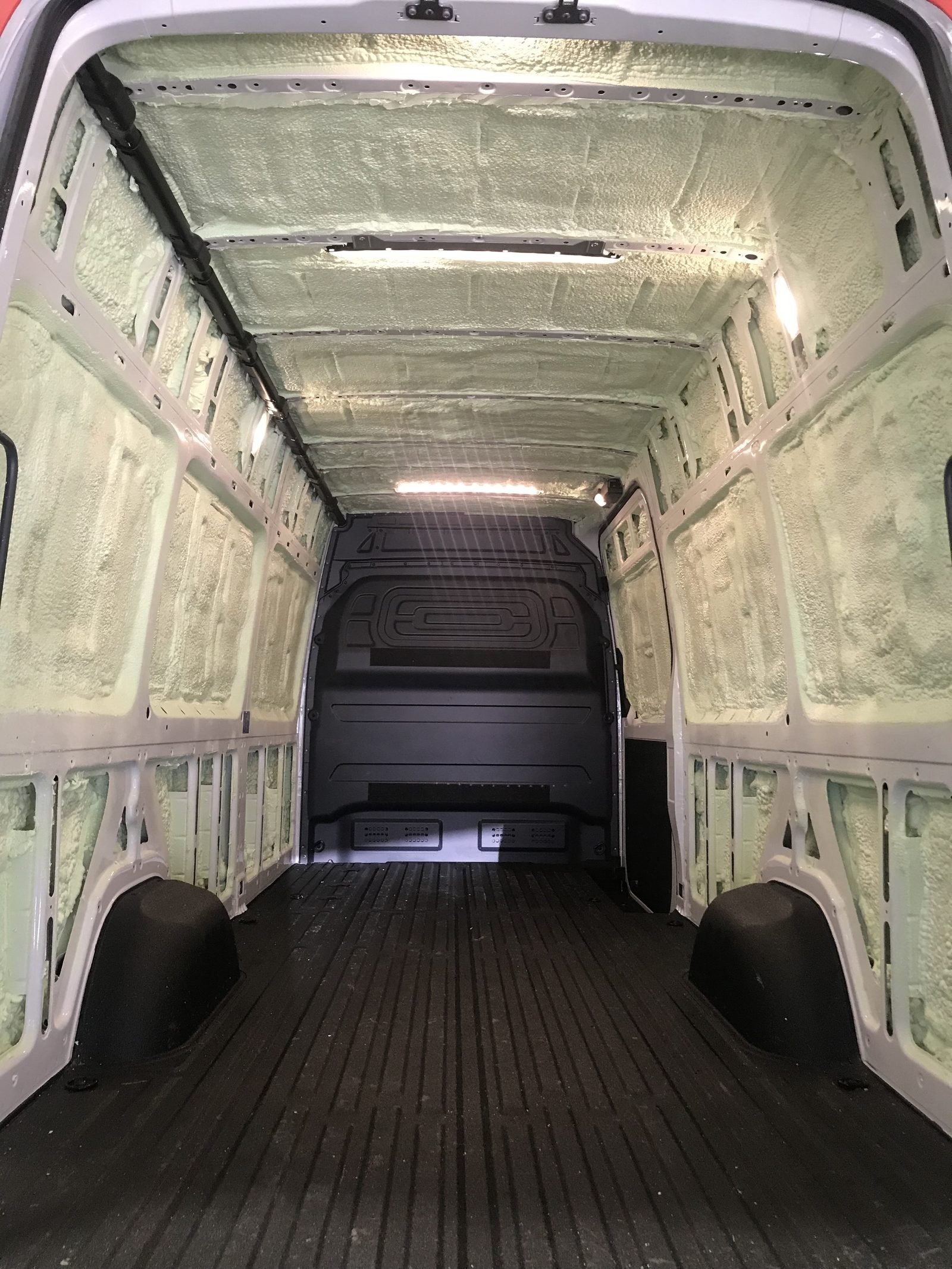
Shipping container spray foam insulation in St. Albert is mostly work on the acreages and growing operations around the city. A sea can is cheap, secure and dry-looking, so they end up holding supplies, packaging, seed, hand tools and the overflow from a shop, and the thing every owner discovers eventually is that dry-looking is not the same as dry.
What a growing operation actually keeps in one
Packaging and cartons, bags of media and amendments, seed, row cover, netting, hand tools and small powered equipment. Nearly all of that is damaged by damp rather than by cold. Cardboard collapses, paper labels lift, seed viability suffers, netting and cover go mouldy, and steel tools mark. It is a different loss profile from a container full of vehicle parts, and it is why these units are worth treating even though nothing in them is individually expensive.
Seed is the sharpest case in the box
Most of what goes into one of these tolerates a bad winter and looks tired afterwards. Seed does not work that way. It responds to humidity and to repeated swings rather than to a single cold night, and the damage does not show until it is sown and comes up patchy, by which point the season is committed and there is nothing to be done. Anyone holding seed in an untreated steel box is carrying a risk they will not see until the worst possible moment, which is why it is worth naming ahead of the tools.
Opening it on a mild day is what loads it up
The moisture that does the damage is largely carried in by the people using the container. Every time the doors are opened on a mild or damp day, a full volume of outside air comes in holding far more water than the cold air it replaced. That air meets steel which is still deeply cold and gives its water up onto it. The practical consequence is that a container visited regularly through the winter accumulates faster than one left shut, which is the opposite of what most owners assume, and it is why the problem is worst on the operations using the box most.
What it is standing on matters too
These containers sit on gravel, on soil or on a few blocks, and the ground underneath releases moisture continuously into the space below the floor. A timber container floor is not a vapour barrier, so that moisture has a route upward into a box that is about to be sealed. Dealing with what is underneath, or at least knowing what it is, belongs in the specification rather than being discovered afterwards, and on a St. Albert growing operation where containers are frequently set straight onto worked ground it matters more than it would on a paved yard.
Who quotes it and who sprays it
You are dealing with the contractor directly on shipping container spray foam insulation St. Albert. We quote the job, we schedule it, and our own installers do the work.
Shipping Container Spray Foam Insulation St. Albert: Common Questions
Why does water drip inside a container with no hole in it? It is condensation forming on the cold ceiling above your contents rather than a leak.
Why was everything wet at once in spring? Frost accumulated on the ceiling all winter with nothing to clear it, then released together.
It is only supplies. Is it worth doing? That is exactly what suffers. Packaging, seed and cover are damaged by damp rather than by cold.
What if we change what it is used for? Then the requirement changes with it. A St. Albert container converted from storage to an office needs the thermal barrier added at that point.
How much does shipping container spray foam insulation cost in St. Albert? A steel box is loud under rain and hail, and a good number of St. Albert enquiries are really about that. Foam on the inside surfaces damps it considerably, which is worth knowing when you are weighing the price.
Size the assembly with the R-value calculator, then get a free St. Albert quote. More on Shipping Container Spray Foam Insulation Alberta.