
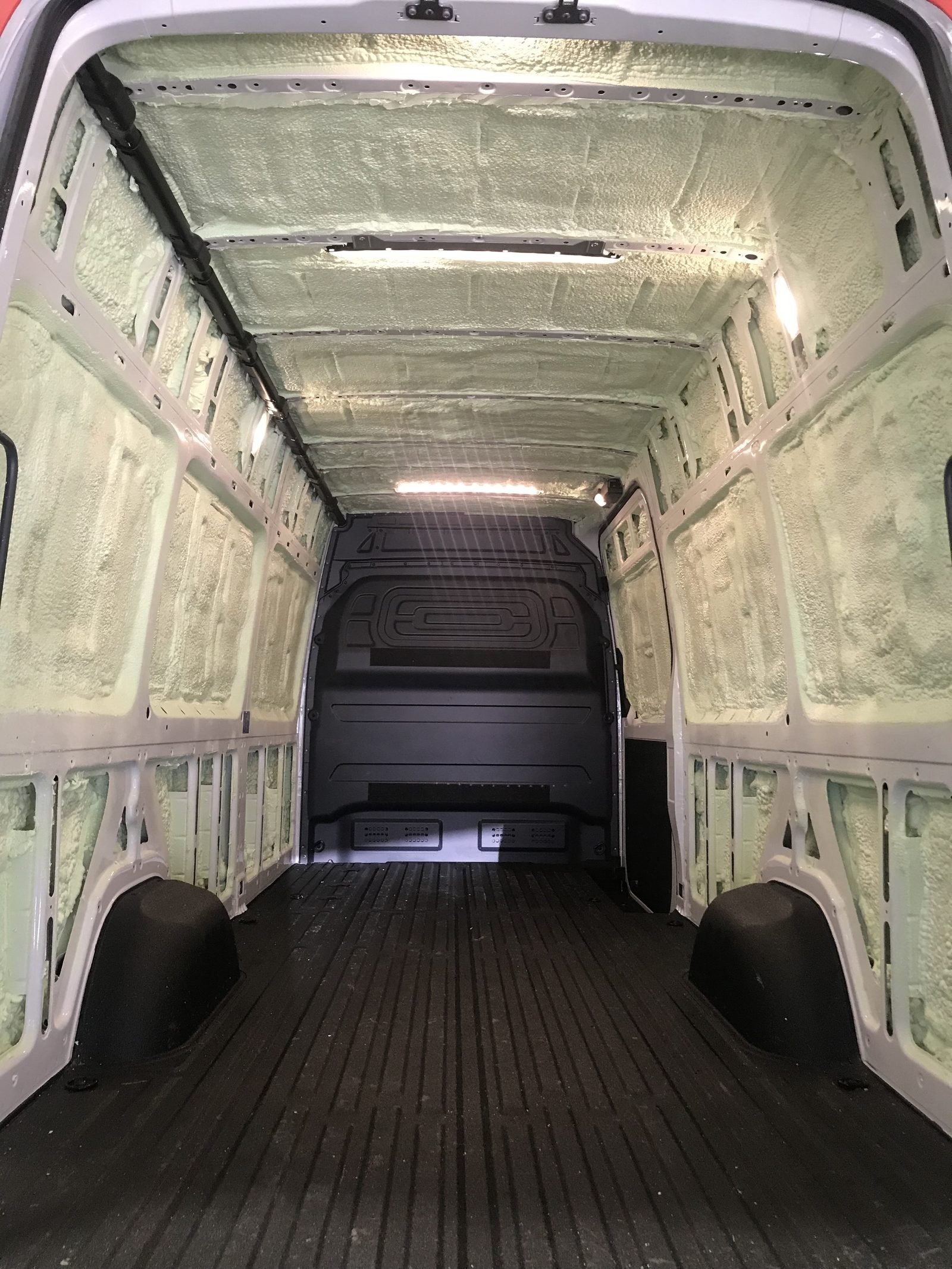
Shipping container spray foam insulation in Leduc has an unusual local feature behind it. Sitting on a freight corridor means used containers are readily available here, so a great many end up on acreages, yards and building sites around this city, bought cheaply and put straight to work.
Easy to buy, and enormously variable in condition
Availability is a mixed blessing. A container that has done a decade at sea is a different object from one that has been used inland, and the difference shows in the floor, the door seals and the amount of surface rust inside. None of that stops it being useful, but it does mean the condition gets established before anything is sprayed, because foam applied over a surface that is actively deteriorating hides a problem rather than solving one. That inspection is quick and it occasionally changes the advice to leave the container alone.
The floor is the part people forget
Container floors are usually treated timber and they have frequently carried things that soaked into them. In a unit that is going to be sealed and used for storage or occupied, that floor is now inside the envelope, and whatever it is holding is inside with it. It is worth deciding what happens to it at the point of specification rather than after the walls are done, because dealing with a floor in a finished container is considerably harder.
A box used as a site office under a flight path
A steel box makes a poor room for a reason people rarely put on the list when they order one. Bare steel reflects sound inside and does almost nothing to stop it coming in, so a container used as an office or a crew room near the Leduc airport and its freight corridor is loud in both directions: an aircraft or a truck outside, and every dropped tool inside ringing off six hard surfaces. Closed cell applied to the skin is specified for the condensation, but it changes this as well, because a continuous adhered layer damps the panel it sits on instead of leaving it free to resonate. It is not an acoustic treatment and should not be sold as one. It is a real secondary benefit on a box that people are going to sit and work in, and it is worth knowing about before the fit-out is planned.
Five months with nothing to clear it
Without a thaw, what condenses does not drain away. It freezes onto the ceiling and the upper walls, more joins it each week, and the whole accumulation releases together when things finally warm. A Leduc owner therefore opens a container in April to find everything wet at the same moment rather than watching a problem develop, and by then anything with fabric, paper or a bearing in it has been in that condition for months.
Who does the work
Nobody gets handed your shipping container spray foam insulation Leduc job. We quote the job, schedule it and stand behind it, and our crews are the ones who show up.
Shipping Container Spray Foam Insulation Leduc: Common Questions
We bought a used one cheaply. Anything to check? The floor, the door seals and how much surface rust is inside. That is quick and it occasionally changes the advice.
Why was everything wet at once in spring? Frost accumulated on the ceiling all winter with nothing to clear it, then released together.
Can we line it with board instead? Not effectively. The corrugated wall leaves voids behind board and the condensation then happens out of sight.
Can we add the covering later? It is far cheaper to plan it in. Retrofitting a thermal barrier into a finished Leduc container means working around everything already installed.
How much does shipping container spray foam insulation cost in Leduc? Where two containers are joined side by side, the cut opening between them is the part that needs thought. On a Leduc build that header and the joint carry the load and the air leakage, and they are priced separately from the panels.
Size the assembly with the R-value calculator, then get a free Leduc quote. More on Shipping Container Spray Foam Insulation Alberta.