
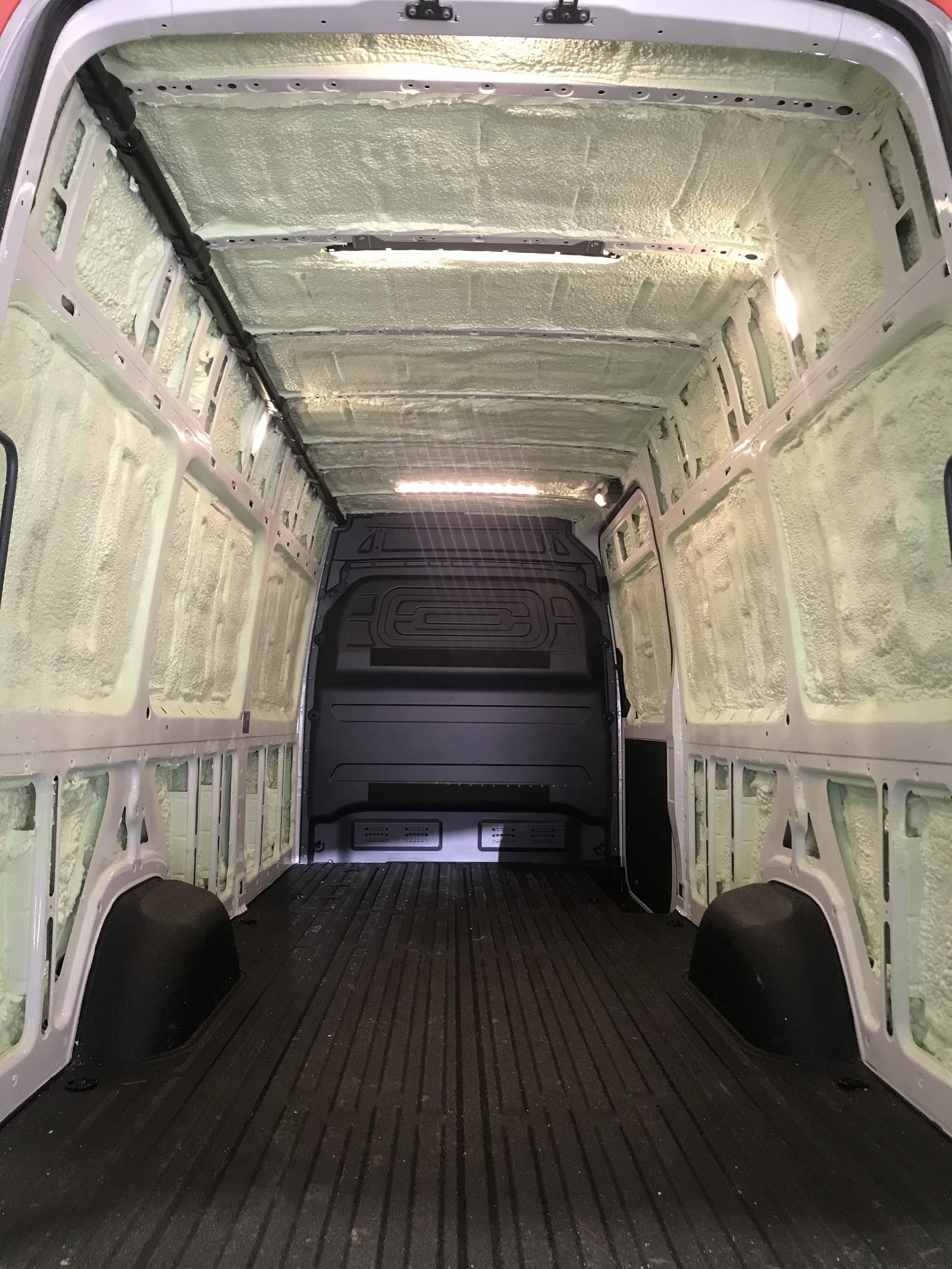
Containers earn their place in a valley where land is scarce and sites are tight. They turn up as secure storage on construction lots in town, as gear and equipment boxes for operations working in the backcountry, as the lockup behind a business with no yard, and occasionally as the shell of a small purpose-built room. They are also the single worst thing that can be done with corrugated steel in a mountain climate, until they are insulated properly.
A container sweats, and that is not a leak
Shipping container condensation is well enough known to have a name. The steel wall is thin, uninsulated and highly conductive, so overnight it radiates to a clear mountain sky and drops below the temperature of the air inside the box. Any moisture in that air - from a damp floor, wet equipment, a load of gear brought in from the snow, or simply the air that was sealed in - condenses on the ceiling and runs down. In the morning the contents are wet and the owner reports a roof leak on a container that has never leaked.
Why nothing cut to size works in here
The interior of a container is corrugated. Every wall and the ceiling are a series of ribs, and a flat board or a batt touches only the high points, leaving a continuous air channel behind it against the coldest surface in the box. That channel is a condensation factory, and because the insulation hides it, the water collects out of sight and the steel corrodes from the inside. The ribs are the reason this building type specifically needs a sprayed material rather than a cut one.
Closed-cell follows the corrugation and removes the surface
Sprayed onto the inside face, closed-cell foam fills every rib and adheres to the steel across the whole area. There is no gap left for air to reach the panel, so there is no cold surface available to condense on - the mechanism is removed rather than managed. At about R-6 to R-7 per inch it reaches a useful value without eating the interior dimensions of a box that is only so wide, and at roughly two inches it is already the vapour control layer. On a container, two or three inches changes the thing completely.
Doors, floor and the frame rails
The double doors at the end are a weak point by design, with gaskets built for sealing out weather in transit rather than for holding a temperature. The plywood floor sits on steel cross members that are exposed to the air underneath, so the floor is a cold plane and worth insulating from below or above depending on the use. And the corner castings and rails are a continuous steel path - they will be the coldest spots in a finished container and should be expected to be.
Mountain siting is part of the specification
A container on a Canmore site is likely to be sitting in deep snow for months, in a wind corridor, on ground that heaves. Set it up off the ground on blocking so air can move under it and so snow does not pack against the panels, keep the doors out of the prevailing wind if the site allows, and make sure there is a path for moisture to leave the box deliberately once it is sealed. A tight container with no ventilation is still holding whatever was shut in with it.
We take care of the work
There is no handing you off here. We quote and manage shipping container spray foam insulation Canmore start to finish, and our crews do the spraying.
Shipping Container Spray Foam Insulation Canmore: Common Questions
Water drips off the ceiling inside. Is the roof leaking? Almost never. The steel is cooling below the inside air temperature overnight and the moisture in that air is condensing on it.
Can we use rigid board or batt instead? Not well. The walls are corrugated, so a flat material leaves an air gap against the coldest steel and that gap is where the water forms.
How much interior space does foam take? Two or three inches off each surface, which is why closed-cell is the sensible choice in a box this narrow - it gets more R per inch than the alternatives.
How much does shipping container spray foam insulation cost in Canmore? Priced per board foot of sprayed area, so the box size and target depth set the number. A twenty and a forty are simply different areas.
How do I get a shipping container spray foam insulation quote in Canmore? Tell us the container length, what it will hold, and whether it will be heated or just kept dry. The use decides the depth.
Size the job with the R-value calculator, then get a free Canmore quote. More on Shipping Container Spray Foam Insulation Alberta province-wide.